
Impact
ThinkTennessee’s 2025 Impact Report highlights our key accomplishments over the past year.
We expanded ThinkTennessee‘s role as a trusted convener on policy issues across the state – including hosting our first-annual statewide Policy Forum with nearly 400 attendees – launched an expanded and interactive State of Our State Dashboard, and published a comprehensive State of Working Tennessee report on Tennessee’s workforce and economy.
Advocacy
During the 2025 Tennessee General Assembly legislative session, we released several policy briefs tied to our legislative priorities for the year: child care, workforce development, housing, and voter access. We delivered these policy recommendations into the hands of legislators to help inform their discussions, and while some issues did not advance this session, a few notable improvements resulted from passed bills. See our 2025 Legislative Session Summary for a detailed overview of bills we monitored this year.
The process for restoring voting rights has changed. Tennesseans no longer need to have their gun rights restored before getting their voting rights restored, and the Certificate of Restoration process is gone – everyone will petition the courts for restoration. While this is an improvement, there is more work to be done to streamline the process and make it more accessible, and it will continue to be one of our main priorities going forward. Learn more about our policy recommendations in our brief Tennessee’s Voting Rights Restoration Process is Overly Complicated.
State employee paid leave policies were expanded to include teachers at special schools and to begin for adoptive parents when the child is placed with them (as opposed to after six months). And starting next year, state employees will also be able to take their six-week paid leave for end-of-life care for parents, spouses, children, and grandchildren for whom they have custody. See our brief Paid Family Leave Flexibility: Good for Tennessee’s Families and the State for more of our recommendations to improve these policies in the future.
The deed restriction on voluntary attainable housing incentive programs was redefined. An amendment to the bill we supported in 2024 to allow municipalities to provide voluntary housing incentives changed the deed restriction from “in perpetuity” to “at least 30 years,” allowing for more opportunity to work with developers and financial institutions to build more housing.
Research
We developed comprehensive, data-driven reports and research products on dozens of topics this year, including our revamped and expanded state dashboard, which now provides over 56,000 data points through interactive charts and maps, and a comprehensive landscape analysis on Tennessee’s economy and workforce.
State of Our State Dashboard
The State of Our State Dashboard, now in its 7th year, is an interactive tool designed to help decisionmakers, advocates, and the public learn more about policy outcomes in Tennessee. The 2025 Dashboard represents a significant expansion of data, enhanced visuals, and increased user interactivity compared to previous iterations. This latest version includes more than 56,000 data points, illustrating how Tennessee ranks nationally on 143 metrics across nine issue areas.
Also new this year is our economic mobility framework called “Charting Tennessee’s Prosperity: 15 Metrics that Matter Most,” a set of trackable outcome measures proven to have a strong influence on economic mobility and access to opportunities. By measuring them every two years, we will illuminate where Tennessee is performing well and where more resources and attention are still needed to ensure Tennesseans are thriving.
State of Working Tennessee Report
Our State of Working Tennessee report highlights where and how our economy is booming – Tennessee is now the 15th largest state by population and employment and 17th largest economy by GDP – and where Tennessee workers are being left behind. Key takeaways from the report include: nearly one in two employed Tennesseans work in the state’s four largest industries, but they are not the fastest-growing industries or highest wage jobs; workers in several critical industries are not earning a living wage; Tennessee’s low labor force participation rate is contributing to a worker shortage; and wages aren’t keeping up with rapidly rising costs, leaving families struggling to pay for basic necessities.
To ensure more Tennessee families can benefit from the state’s growth, our report recommends policymakers focus on strategies such as boosting access to high-quality jobs, supporting working families with child care and paid family leave, increasing transparency and job standards for economic incentives, improving the affordability of essentials, and more.
Engagement
We engaged more than 3,300 policy, advocacy, and civic leaders in policy discussions through various presentations and events throughout the year, including our first-ever statewide policy forum with nearly 400 attendees, a mayoral roundtable on housing, and a CEO roundtable on child care and paid family leave policy.
Inaugural ThinkTennessee Policy Forum
We hosted our inaugural statewide Policy Forum in September, convening nearly 400 policymakers, business leaders, nonprofit partners, mayors, and community stakeholders at Nashville’s Music City Center. The day-long event focused on four of Tennessee’s most urgent policy challenges — housing, transportation, child care, and workforce development — and created a bipartisan, cross-sector space for collaborative problem-solving. Throughout the day, attendees engaged in panels and plenaries featuring former Governors Phil Bredesen and Bill Haslam, state economic leaders, major employers, and policy experts.
Mayors’ Roundtable on Housing & Infrastructure
In April, ThinkTennessee convened mayors and planning staff from eight cities – Chattanooga, Franklin, Jackson, Kingsport, Knoxville, Memphis, Nashville, and Smyrna – for a special roundtable discussion on housing and infrastructure challenges in Tennessee. The event offered mayors an opportunity to identify common barriers and share innovative strategies to address the housing shortage in their communities and support their growing populations. Later the same day, we also hosted a public panel “Breaking Ground: A Policy Discussion on Housing & Infrastructure” with a slate of experts who discussed potential policies and strategies to build more housing across the state.
CEO Roundtable on Child Care & Paid Family Leave
In September, C-Suite executives from some of Nashville’s largest employers joined an intimate roundtable discussion – co-hosted by ThinkTennessee, the Nashville Area Chamber of Commerce, the Nashville Early Education Coalition, and the Community Foundation of Middle Tennessee – focused on child care and paid family leave policy. The conversation highlighted common challenges the employers see in their workplaces, particularly how the lack of affordable caregiving options is impacting worker retention.
By The Numbers
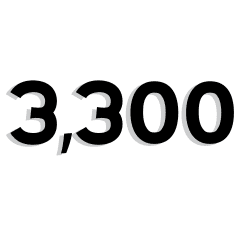
Gave 77 presentations to more than 3,300 policy, advocacy, and civic leaders

Published 74 reports, case studies, blog posts, and newsletters

Hosted 133 civic leaders at 4 luncheons
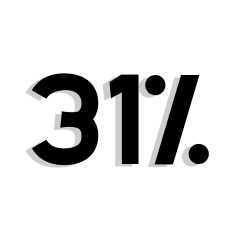
Increased social media followers by 31%

Created a new State Dashboard featuring more than 56,000 data points

Met with 38 elected leaders