
Criminal Justice
CRIMINAL JUSTICE IN TENNESSEE: TRENDS, NOTABLE PROGRESS, AND PERSISTENT GAPS (2026)
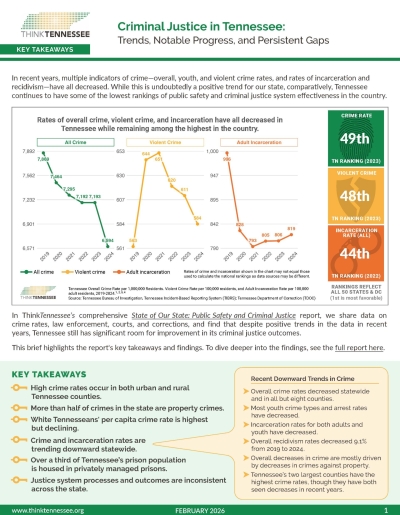
Tennessee has experienced an undoubtedly positive trend in recent years: multiple key indicators of crime have decreased from 2019 to 2024. Yet at the same time, Tennessee continues to see some of the country’s lowest rankings of public safety and criminal justice system effectiveness. Our new brief highlights the meaningful declines in several major crime and incarceration indicators as well as the structural gaps that continue to shape justice system experiences across the state.
Despite positive trends, the analysis notes persistent gaps in justice system processes and outcomes across counties, including inconsistent case outcomes, variations in court practices, and ongoing differences in criminal justice experiences for Tennesseans depending on where they live. The brief also underscores the limitations posed by fragmented data collection and sharing across systems, which can impede timely understanding of trends and outcomes statewide.
This brief summarizes the findings and key takeaways from our comprehensive State of Our State: Public Safety and Criminal Justice report. To dive deeper into the findings, see the full report here.
Click Image to View Full Report
Reducing the Harms of Court Debt: Driver’s License Revocations are an Ineffective Policy for Increasing Court Collections (2022)
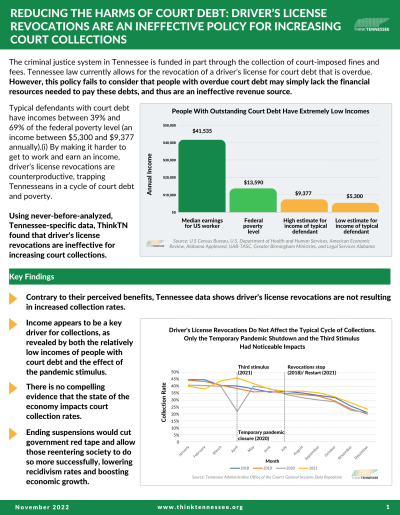
Tennessee law currently allows for the revocation of a driver’s license for court debt that is overdue.
This brief evaluates the impact of driver’s license revocations and finds no meaningful effect on court debt collection rates in Tennessee. It also provides policy options for systemic reform, including the elimination of driver’s license revocations, increased consistency in the ability-to-pay determination process, and implementation of either targeted or broad fee elimination.
Our brief provides a summary of our key findings and recommendations. For more detail, please see our full report here.
Click Image to View Full Report
Eliminating Juvenile Fines & Fees in Tennessee (2022)
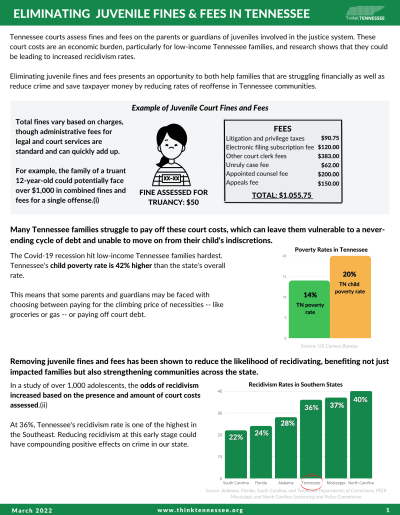
Tennessee courts assess fines and fees on the parents or guardians of juveniles involved in the justice system. These court costs are an economic burden, particularly for low-income Tennessee families, and research shows that they could be leading to increased recidivism rates.
This brief describes the inequitable impact of juvenile fines and fees and underscores how their elimination would help Tennessee families and save taxpayer dollars by reducing recidivism rates in Tennessee communities.
Click Image to View Full Report
BEYOND PAYMENT PLANS: BREAKING THE CYCLE OF COURT DEBT IN TENNESSEE (2021)
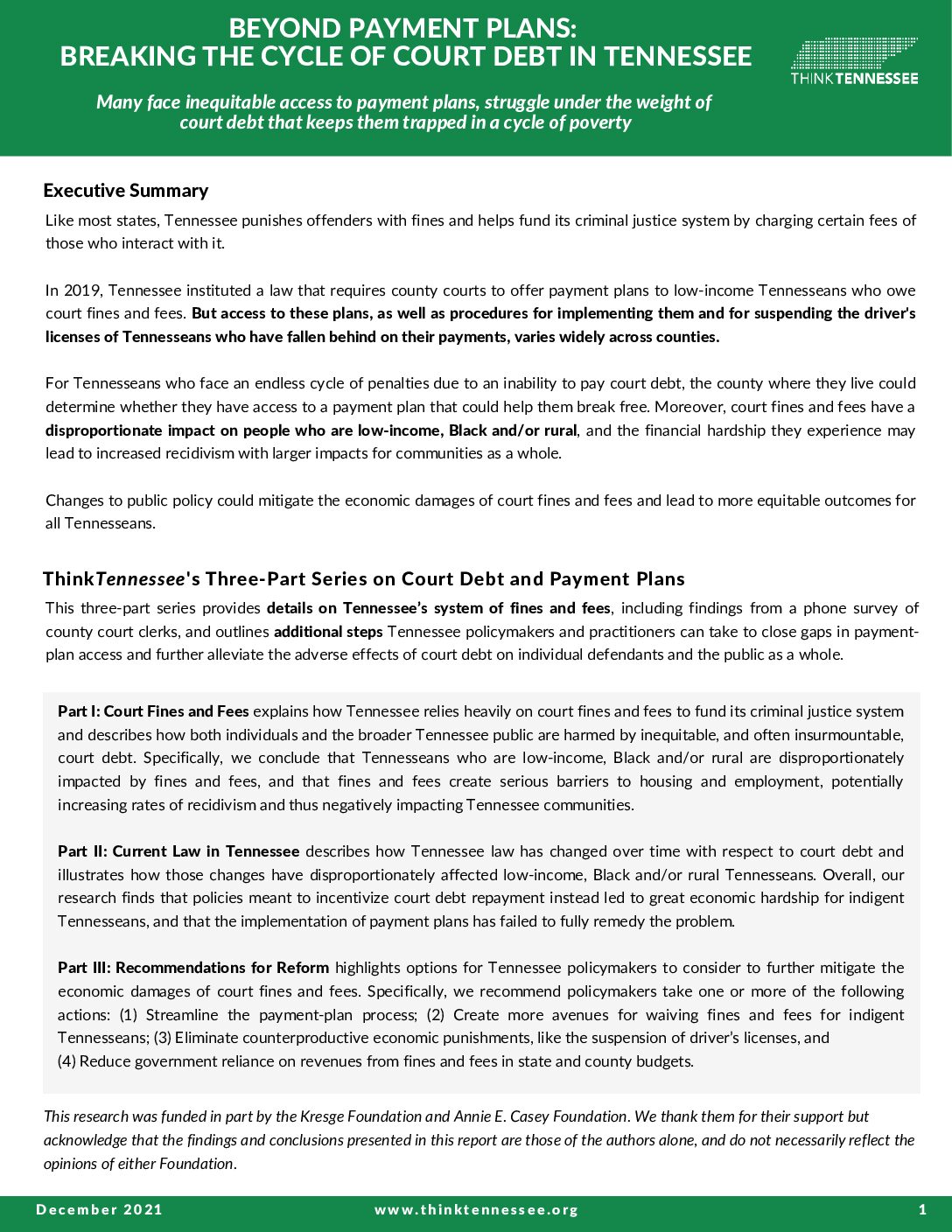
In 2019, Tennessee instituted a law that requires county courts to offer payment plans to low-income Tennesseans who owe court fines and fees. But access to these plans, as well as procedures for implementing them and for suspending the driver’s licenses of Tennesseans who have fallen behind on their payments, varies widely across counties.
This three-part series provides details on Tennessee’s system of fines and fees, including findings from a phone survey of county court clerks, and outlines additional steps Tennessee policymakers and practitioners can take to close gaps in payment-plan access and further alleviate the adverse effects of court debt on individual defendants and the public as a whole.
Click Image to View Full Report