
The 114th General Assembly adjourned on April 23rd and reconvened 12 days later (May 5th – 7th) for a special session to redraw Tennessee’s congressional district lines. Alongside high-profile debates over school vouchers, immigration, and state vs. local control, lawmakers enacted policies affecting ThinkTennessee’s priority areas of strengthening democracy and supporting working families – particularly Tennesseans’ election processes, housing availability, and child care access.
Earlier this legislative session, we highlighted legislative proposals under consideration related to working families, civic institutions, and democratic processes. While many proposals did not advance, lawmakers approved several notable changes. This update summarizes enacted legislation, emerging policy trends, and proposals likely to return in future sessions.
Legislative decisions this session impacting elections, housing affordability, access to child care, and transportation options include:
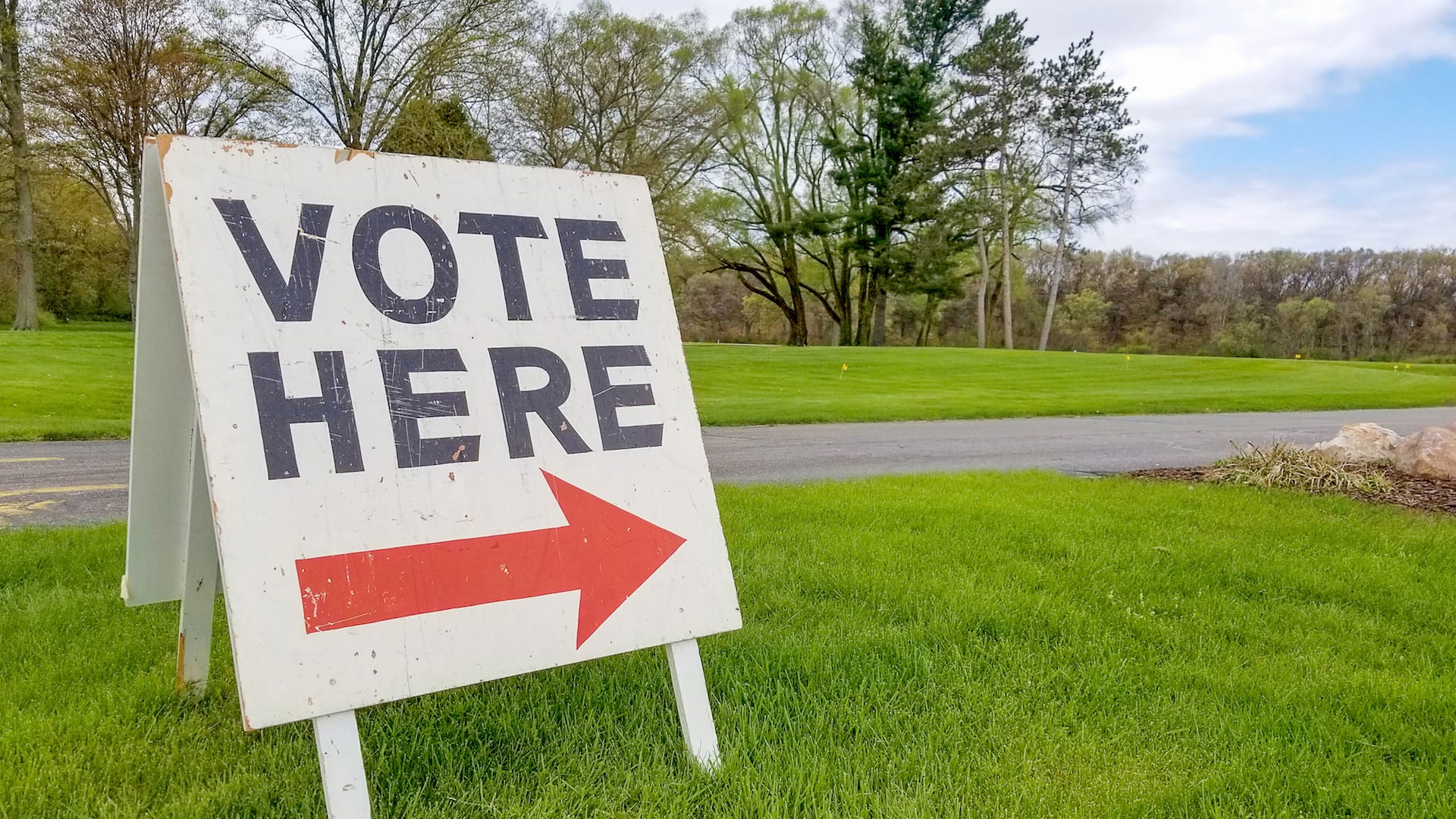
- Major changes to the August 6 election cycle include new congressional districts for most voters and new timelines for candidates and election officials.
- Tennesseans seeking to restore their voting rights after a felony conviction have a financial burden lessened.
- A new tax assessment process for housing developments built with federal LIHTC credits strengthens the incentive for development of attainable housing across the state.
- Two new housing programs (one is limited to Williamson County) seek to expand housing availability for working families.
- Additional funding sources identified to help support child care programs.
- Expansion of paid leave for state employees to include foster parents.
- Legislative approval for Choose How You Move‘s bus rapid transit plan for three projects.
ECONOMIC SECURITY AND WORKING FAMILIES
This year, legislative conversations again featured ways to address our state’s housing and child care crises, support workers providing care to family members, enhance workforce development opportunities, and increase affordability for Tennessee’s working families.
Lawmakers Expand Incentives and Programs for Workforce Housing
Three bills awaiting the governor’s signature seek to expand the availability of workforce and attainable housing across Tennessee.
New LIHTC assessment rules change attainable housing tax calculations.
HB 753 (Faison)/SB 539 (Stevens)(H: 69-15-7; S: 30-0) changes the way properties receiving the federal Low-Income Housing Tax Credit (LIHTC) are taxed. The legislation allows cities and counties to adopt an ordinance or resolution to exclude the value of LIHTCs from property tax assessments. Doing so will improve the financial feasibility of attainable housing developments, and it aligns Tennessee with the practice of 40 other states.
Some local governments have used an alternative workaround and entered Payment in Lieu of Taxes (PILOT) agreements with LIHTC housing developers – where developers make payments to local governments that are less than what property taxes would normally be. Two new laws make similar changes to the PILOT process and prevent a city or county from entering into an agreement without both governments agreeing: HB 890 (Todd)/SB 1398 (Watson)(H: 78-10-3; S: 33-0) and HB 1878 (Littleton)/SB 2646 Roberts)(H: 85-0-3; S: 32-0).
New state and local workforce housing programs established.
In this year’s budget proposal, the governor proposed allocating $30 million to THDA to implement a Starter Home Revolving Loan Fund to support construction of attainable housing. The legislature instead reallocated the funding to a Community Workforce Housing Innovation Pilot Program (HB 2509 (Sexton)/SB 2410 (Powers)(H: 79-7-6; S: 32-0)). The program will be administered by THDA and targets innovative projects in areas of each Grand Division with the largest disparity between the area median income and sales price for a single-family home and where the population growth is greatest.
HB 1796 (T. Hicks)/SB 1849 (Crowe)(H: 92-1-1; S: 28-0) also features a new Essential Governmental Employee Housing Act of 2026 (added as an amendment by Senator Johnson). The program, which applies to Williamson County, Franklin, and Brentwood, allows those local governments to partner with private entities to develop, finance, and operate housing for essential employees (defined as local government or public school system employees whose duties and responsibilities the local government body deems to be critical).
Property tax and homeownership protection proposals didn’t pass but are likely to return.
Sponsors of a proposal to require local referendums for property tax increases above a certain threshold took the bill off notice this year but indicated the conversation will continue. And two bills seeking to protect Tennessee homeowners passed through the full Senate but failed in House subcommittees:
- HB 565 (Hemmer)/SB 204 (Oliver)(S: 29-1) would have limited to once a year the number of times certain entities could make unsolicited offers to buy homeowners’ property.
- HB 298 (Behn)/SB 242 (Oliver)(S: 31-1) would have limited certain entities from purchasing more than 100 single-family homes for rental properties.
Legislation Identifies New Revenue Streams for Child Care Initiatives
Legislators continued to acknowledge the state’s child care crisis as a major issue impacting the state’s families and workforce. New laws seek to both make it easier for child care providers and to identify new funding sources to support additional programs.
New laws modify child care workforce and licensing requirements. Two new laws seek to make it easier for child care providers to open and operate by reducing licensure requirements for military family child care homes that have received federal certification and lowering from 21 to 18 the age requirement for teachers and assistants in certain child care programs.
Legislators identify potential revenue streams for child care programs.
HB 2358 (Hawk)/SB 1921 (Massey)(H: 88-0-1; S: 31-0) initially proposed annually allocating up to 30% of the state’s TANF rainy day fund to the Child Care and Development Fund (CCDF) to support participation in Smart Steps, the state’s child care assistance program, though federal guidelines prevent that kind of transfer. The bill was amended to instead gather information to help inform future funding solutions by requiring the Department of Human Services to publish an annual report with information on TANF and CCDF expenditures and balances and how many children are participating in the Smart Steps program.
HB 2502 (Sexton)/SB 2166 (Watson)(H: 70-19-2; S: 21-7) institutes a new $10 fee on international wire transfers up to $500 and 2% of larger transactions. Bill sponsors shared that in FY24-25, these transactions totaled $5.5 billion. The new revenue will be dedicated in part to supporting new child care programs: 18.5% (estimated to be $5.1 million in the first year and $10.1 million in subsequent years) to the Promising Futures program (see below), 20% to the state general fund, 51.5% to TennCare buybacks, 5% to THDA for workforce housing, and 5% to support a Teacher Internship fund.
Legislative discussions raised concerns over the impact on the unbanked, the constitutionality of treating certain transactions differently (the law applies only to wire transfers and not those conducted through a financial institution), and imposing a tax on foreign as opposed to domestic commerce.
- HB 1979 (White)/SB 2062 (Watson)(H: 77-3-5; S: 31-0) establishes the Promising Futures Act to support three three-year pilot programs and targeted child care assistance initiatives:
- The Child Care Workforce Scholarship Pilot Program ($5 million) to be administered by the Department of Human Services to provide eligibility for free child care to child care workers working at least 30 hours a week,
- The CareShare Tennessee Pilot Program ($5 million) to provide employer-supported child care assistance through shared employer contributions, and
- The Smart Steps Plus Program (remaining funds) to provide child care scholarships to eligible working families whose incomes exceed thresholds for existing assistance programs.
New policies expand support for two sets of family caregivers
Two new laws support family caregivers – an expansion of the paid leave policy for state employees to include foster parents of a minor child and a one-year pilot program providing financial support to caregivers of family members with dementia for certain supplies and property improvements.
Affordability measures address taxes, utilities, and household costs
Multiple legislative proposals addressed multiple areas of affordability, with a handful passing into law dealing with grocery taxes, utility bill costs, court fines, and savings accounts.
HB 2186 (Lamberth)/SB 2160 (Watson)(H: 76-16-2; S: 27-5-1) allows metro governments to levy a tax on the retail sale of food and food ingredients lower than their local option sales tax rate. Similar legislation passed in 2024 allowing cities to do the same.
- The 19 or so other proposals to exempt various items (specific foods, firearms and ammunition, motor vehicles for military service members, school supplies sold to teachers, and feminine hygiene products) were presented but not funded in the budget.
HB 1847 (Butler)/ SB 2128 (Taylor)(H: 76-14; S: 28-0-2) prohibits local governments or utilities from paying or absorbing electrical infrastructure costs of data centers using 50 or more megawatts of power in their first three years. Sponsors presented the bill as an effort to protect electrical customers from rising costs caused by the growth of large data centers by preventing utilities from passing the costs onto customers.
HB 1555 (Slater)/SB 1591 (Haile)(H: 37-48-3; S: 20-11) sought to remove the $10 cap on court costs associated with violations of Tennessee’s hands-free driving law, but it failed on the House floor. In early discussions, House members flagged concerns about rising court costs, and the bill was amended to instead cap costs at up to 50% of the standard court costs associated with other traffic citations (an estimated range of $75-$150 as costs vary by county).
HB 1447 (Baum)/SB 2397 (Yarbro)(H: 84-7-3; S: 29-0), a bipartisan bill, enacts the infrastructure needed to allow Tennessee to participate in a federal IRA program known as Trump Accounts. Further legislative approval would be needed to begin the program which makes those 18 or older with Social Security Numbers eligible for an IRA.
Workforce and transportation policy discussions continue
In workforce development, conversations around lottery-funded scholarship programs mostly acknowledged anticipated funding shortfalls in the near future, with proposals to expand eligibility or programming not advancing this year. Two bills did pass:
-
- HB 2106 (Lamberth)/SB 2159 (Watson)(H: 96-0; S: 33-0) caps at $10 million the total funds from the lottery for education account that can be transferred to the TN Promise scholarship reserve account. Sponsors indicated that the TN Promise account is solvent as the endowment has reached a level where investment earnings can support the program’s costs for the foreseeable future, allowing the additional funds to be used elsewhere.
- HB 1759 (Slater)/ SB 1762 (Haile)(H: 72-18-2; S: 28-0) establishes a new pathway of adult public charter schools to support what the bill’s sponsors said were the 600,000 working-age adults in Tennessee without a high school diploma who want to participate in the workforce.
A handful of transportation bills sought to identify alternative funding sources to support the state’s growing infrastructure funding deficit, but none advanced all the way through as legislators await a TACIR report due by September on the subject. Electric vehicles (EVs) were once again a revenue target, with a proposal to tax the electric power used in EVs and allocate the revenue generated to transportation infrastructure or systems. While that didn’t pass, new legislation all passed unanimously in both chambers that exempts military service members stationed outside the state from the EV registration fee, clarifies non-plug-in hybrids are subject to the EV registration fee, and prohibits homeowners’ associations from preventing an owner from installing a personal EV charging station.
-
- Additionally, SJR 657 (Massey/Howell)(H: 92-2-1; S: 32-0) grants legislative approval for Nashville’s Choose How You Move transportation program’s use of bus rapid transit systems using separate lanes on three projects (Nolensville Pike, Gallatin Pike, and the Downtown corridor) while also prohibiting bike lanes.
ELECTIONS AND CIVIC INSTITUTIONS
Legislation passed in both the regular session and last week’s special session will have a big impact on Tennessee’s election processes, impacting both candidates and voters.
Special session brings mid-decade redistricting changes
Legislators reconvened for three days last week and passed into law a new congressional district map and special deadlines and timelines for this year’s primary election cycle. In order to consider new district maps, they had to delete language of a law that had prevented these types of changes for the past 54 years.
HB 7003 (Sexton)/SB 7004 (Johnson)(H: 64-25-3; S: 25-5) establishes new congressional districts going into the August 6th primary election. This is the first time the state has redrawn congressional districts outside of the regular redistricting process that occurs after the decennial Census. Bill sponsors said the intent was to grow the state’s Republican congressional district from 8 to 9 by carving Shelby County into three (instead of two) districts. The map (available at the Comptroller’s website) also makes substantive changes to other counties – including redrawing the three districts that incorporate Nashville – with just districts 1 and 2 appearing to remain the same.
HB 7001 (Sexton)/SB 7001 (Johnson)(H: 68-25-3; S: 23-7) establishes new policies for the August 6th primary.
- The candidate filing deadline (which had already passed on March 10th) is now May 15th at noon. Candidates who had already qualified are not required to submit new petitions, but if they wish to run in a district with a different number than the one they previously were running in, they must submit notarized written notice to the coordinator of elections by the new filing deadline.
- The candidate residency requirements (which include having lived in the state for three years and the county represented for one) have been waived for this election cycle.
- The time periods for petitions to be verified by election officials and candidates to be approved by parties have been condensed. Candidates had two months to pick up a petition and submit it to meet the qualifying deadline of March 10th earlier this year, and parties typically have 10 days to verify a candidate’s eligibility to run where it is now two days after these changes.
HB 7002 (Sexton)/SB 7002 (Johnson)(H: 66-24-5; S: 22-8) deletes a portion of state law (Tenn. Code Ann. §2-16-102) in place since at least 1972 that prohibited the redrawing of congressional districts between regular apportionments (occurring after each decennial Census).
While the U.S. Constitution requires the distribution (apportionment) of congressional seats across the states to use Census data, it does not require Census data to be used for drawing districts. According to the National Conference on State Legislatures, as of 2025, 20 states don’t explicitly require Census data to be used for redistricting.
Prior to the special session, legislation made changes to election policies impacting voters and candidates
During the regular session, legislation passed that saw a major change to voting rights restoration eligibility and rules for local elected officials’ eligibility to hold certain offices, the advancement of efforts to consolidate county elections, and a focus on civic education and candidate security.
Changes revise financial requirements for voting rights restoration
HB 687 (Camper)/SB 336 (Akbari)(H: 64-24-5; S: 24-8 (2025), 31-1 (2026)) further streamlines the state’s voting rights restoration process by updating the financial obligation requirements associated with eligibility. Previously, in addition to having completed their sentence, Tennesseans with a felony conviction were required to pay in full any ordered restitution and assessed court costs and to be current in child support obligations. This new legislation, passed last year in the Senate and this year in the House, doesn’t erase those debts, but rather restores eligibility for voting rights to those who have been compliant with child support orders for 12 months and without factoring in court costs.
New law limits simultaneous service in multiple local offices
HB 618 (Wright)/SB 624 Briggs)(H: 76-14; S: 21-10) restricts the number of offices local elected officials can hold. Originally seeking to restrict all local elected officials from holding more than one office, this bill grandfathers in those who are currently serving in more than one position. Legislative conversations raised concerns about the impact of the new law, from questioning the legality of making exceptions for some elected officials different from others and about the impact in smaller communities where it can be harder to find people willing to serve in office.
Proposed constitutional amendment to consolidate county election cycle advances
HJR 729 (Lamberth)/SJR 551 (Haile)(H: 74-11; S: 23-9) proposes amending Tennessee’s constitution to move the elections for county offices (except for property assessors) to an August primary and November general cycle. The resolutions must pass again during the next legislative session (2027-2028) with a two-thirds majority of votes in both chambers before being placed on the ballot for voters in November 2030.
- HB 1497 (Cepicky)/SB 1630 (Hensley)(H: 67-26-1) sought to similarly consolidate municipal elections and passed the House but not the Senate. The bill initially also sought to require municipal elections to be partisan, but that provision was removed after early committee discussions in the House raised concerns.
New laws address civic education and candidate security
A number of proposals were introduced this year around requirements for teaching civics in Tennessee schools. HB 1747 (Freeman)/SB 1819 (Campbell)(H: 96-0; S: 31-0) requires public high schools to provide students enrolled in government and civics courses with the opportunity to participate in three civic engagement field days, one for each branch of government. And two new laws require schools to show a video about the Declaration of Independence and the religious affiliations and moral beliefs of the founding fathers, and to dedicate an instructional day each school year to observing the 4th of July and documents and events of the country’s founding.
Additionally, two new laws seek to enhance the security of candidates and elected officials: allowing up to $12,000 of campaign funds to be used annually for security enhancements at officeholders’ personal residence, and making the address on nominating petitions for candidates for judicial offices private (unless requested to verify eligibility).
Party registration legislation fails to advance
HB 886 (Todd)/SB 777 (Lowe) and HB 1159 (Lynn)/SB 831 (Hensley) both proposed a new process for voters to register by political party and to close party primaries to registered members only. Proposals varied in the way that voters could make changes to their party membership (using or prohibiting the online registration system) and with the deadline for making those changes (on or before the voter registration deadline). Both efforts failed in House committees.
New judicial procedure changes and court capacity measures approved
New legislation seeks to increase capacity for the busiest criminal court systems, and changes to legal processes include new rights for the state in cases brought against it, new procedures for how those cases will be heard, and new oversight of Shelby County’s district attorney.
Legislature considers additional judicial capacity and court staffing measures
At least six bills sought to support judges and judicial officers with pay raises, additional public defender and district attorney positions, and a study to review pay equity for county and state positions but did not get funded. But legislators did pass a pilot project (HB 2252 (Grills)/SB 2025 (Lowe)(H: 94-0; S: 28-5)) placing a magistrate in criminal courts in the 10 counties with the highest caseloads. Magistrates would help alleviate the workload by conducting arraignments, accepting pleas, and issuing warrants. Discussions raised concerns about unelected magistrates playing this role – particularly for hearing pleas on felony cases – while district attorneys noted the additional help could reduce backlogs, particularly around signing search warrants.
New laws change procedures for constitutional and state government challenges
Changes to legal processes include individuals’ standing to sue, the state’s right to appeal, and procedures of the three-judge panels to hear constitutional challenges.
HB 1971 (Farmer)/SB 1958 (Stevens)(H: 56-38-1; S: 18-13) narrowly passed both chambers. The bill removes the “right of cause of action” for Tennesseans seeking declaratory and injunctive relief in challenges of the legality or constitutionality of a state governmental action – it remains for challenges brought against local governments. Bill sponsors cited unintended consequences of a 2018 law which provided the right and stated that by returning to the prior practice, lawsuits against the state would be reduced.
HB 1791 (Zachary)/SB 1731 (Stevens)(H: 55-28-5; S: 26-6) expands the situations where the state can automatically appeal rulings against it in lawsuits challenging laws, executive orders, agency rules, and administrative or other governmental actions. The law grants the state the ability to move cases to appellate courts almost immediately, which sponsors said protected the state from disruptive lawsuits and helped things move faster, while discussion also raised concerns over giving the state a procedural advantage and impacting the time it takes for cases to come to conclusion.
HB 2184 (Lankford)/SB 1858 (Stevens)(H: 76-20; S: 27-6) makes changes to the three-judge panel that hears challenges to state laws. The panel is now appointed entirely by the state’s Supreme Court (who previously appointed two to join the judge where the case was filed) and can hear cases anywhere in the state (previously, cases were heard in the county filed or Sumner County). And the legislature now has 90 days, up from 15, to remedy a district map in response to a court ordered change to a redistricting map.
New oversight process established for Shelby County prosecutorial decisions
HB 483 (Farmer)/SB 443 (Taylor)(H: 66-25; S: 23-6-1) authorizes the attorney general (AG) to review the Shelby County district attorney’s (DA) actions for the purpose of ensuring the “proper administration of justice necessary to protect the safety of the community and to provide accountability to the public.” The report specifically reviews cases associated with the Memphis Safe Task Force and will be submitted to the legislature by January 1, 2027. If the AG finds that Shelby’s DA unjustifiably refused to prosecute cases, they can petition the state Supreme Court to appoint a pro tem DA to prosecute those cases. Discussions raised concerns about the impact on a DA’s ability to do their jobs if they were subject to such review and case law determining that DAs have the sole power to make these types of decisions.
Together, these changes reflect continued legislative focus on economic affordability, workforce participation, election administration, and the structure of state and local governance, while also signaling these discussions will likely continue in future sessions. We’ll be back next year with the new slate of proposals and legislation!